With its first automated facility in the U.S., the company is producing polyolefin-based conductive polymers for pipettes and more.
Read more: Plastics Technology
 Coperion
Open navigation
Coperion
Open navigation
With its first automated facility in the U.S., the company is producing polyolefin-based conductive polymers for pipettes and more.
Read more: Plastics Technology

Many chemical and pharmaceutical process engineers are challenged by metered dispensing of reactive powders into reactors and large tanks. But dispensing difficult-to-handle ingredients in a contained and accurate method can be fulfilled and completely automated using specifically designed loss-in-weight (LIW) feeders. The combination of highly advanced weighing technology, and a contained and sanitary feeder design provides for an ideal automated method of powder delivery—without the dangers and inefficiencies of traditional manual powder loading techniques.

Manufacturing processes involve a wide variety of raw materials, depending on the industry, and there's an equally wide variety of feeding options available on the market to bring these bulk materials into the process. In applications where free-flowing bulk solids need to be accurately fed to ensure an optimal end-product quality, single screw feeders are often the solution of choice. However, there are a variety of options that can get the job done besides single screw feeders, such as bulk solids pumps, belt feeders, and vibratory feeders. The feeding tool choice is generally based on various application aspects, including the bulk solid material's characteristics, the desired feedrate, hazardous location limitations, the material's flowability, and the space available for installing the equipment.


Established in 1946, Salina, Kansas-based Repco has provided the enrichment industry with ideas, services and products such as flour oxidation and maturing services, vitamin and mineral premixes, micro-ingredient dispensing systems and on-site field servicing. The division of the company that produces vitamin and mineral premix products decided to look into options for modernizing an outdated mechanical transfer system. The decade-old bucket elevator system that transferred the premixes from mixer to packaging was causing housekeeping and segregation issues, not to mention large amounts of product being lost during clean-out. Repco contacted Coperion K-Tron to look into pneumatic conveying solutions that would clean up the process and ensure the finished blended product did not segregate during transfer to the packaging system.
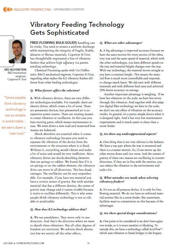
Free-flowing bulk-solids handling can be tricky. You need to ensure a uniform discharge while maintaining the integrity of fragile, friable, abrasive or fibrous materials. Coperion K-Tron has thoughtfully engineered a line of vibratory feeders that achieve high accuracy via patentpending technology. Chemical Processing spoke with Urs Helfenstein, R&D mechanical engineer, Coperion K-Tron, regarding what makes the K3 vibratory feeders different from other feeding technologies.
The dedication of Garrison Brothers Distillery to produce artisanal bourbon in Hye, Texas, has resulted in an increase in popularity, substantial growth and a need to increase production. The distillery prides itself on producing a unique wheated bourbon using the finest locally sourced and organic ingredients, some of which are grown right on the distillery property. Keeping true to that culture, Garrison Brothers expected no less from the system to supply those raw materials to the process.
Continuous direct compression (CDC) tableting offers several key technical and process advantages over traditional batch tableting processes. First and foremost, it allows the manufacturer to develop a drug product on the same equipment drivetrain that will be used for the product's final manufacture, eliminating process scale-up. CDC tableting also allows for increased quality assurance and requires less production space, which lowers utility and labor costs.
With the uncertainty of today’s unprecedented times and tough global economy, the pressures for proper maintenance, increased longevity of process equipment and optimal performance are higher than ever before. Feeders that are not feeding accurately typically produce off-spec finished products and require extended periods of downtime to recalibrate or fix, resulting in decreased production rates and lost profits. Understand key factors affecting volumetric and loss-in-weight units.
Today’s modern manufacturing processes utilize loss-in-weight (LIW) feeders as the automated dispensing technology for dry bulk solids. The most current feeding technologies have evolved in many aspects through improved control and design features with an emphasis on process robustness and intelligence. It is expected that feeder controls can easily connect to industrial networks and key process data, which has become a critical criterion in evaluating not only feeder performance but also real-time indication of the complete process. This article will address what a processor should consider when evaluating his current feeding equipment and the feeder’s ability to monitor, trend and react to process variations.
Loss-in-weight (LIW) feeder performance is affected by a number of influences, both internal and external to the feeder and feeder process. Understanding the significance of these influences is critical for achieving optimal performance. This article will describe some strategies to help ensure accurate weighinhg with your LIW feeder.